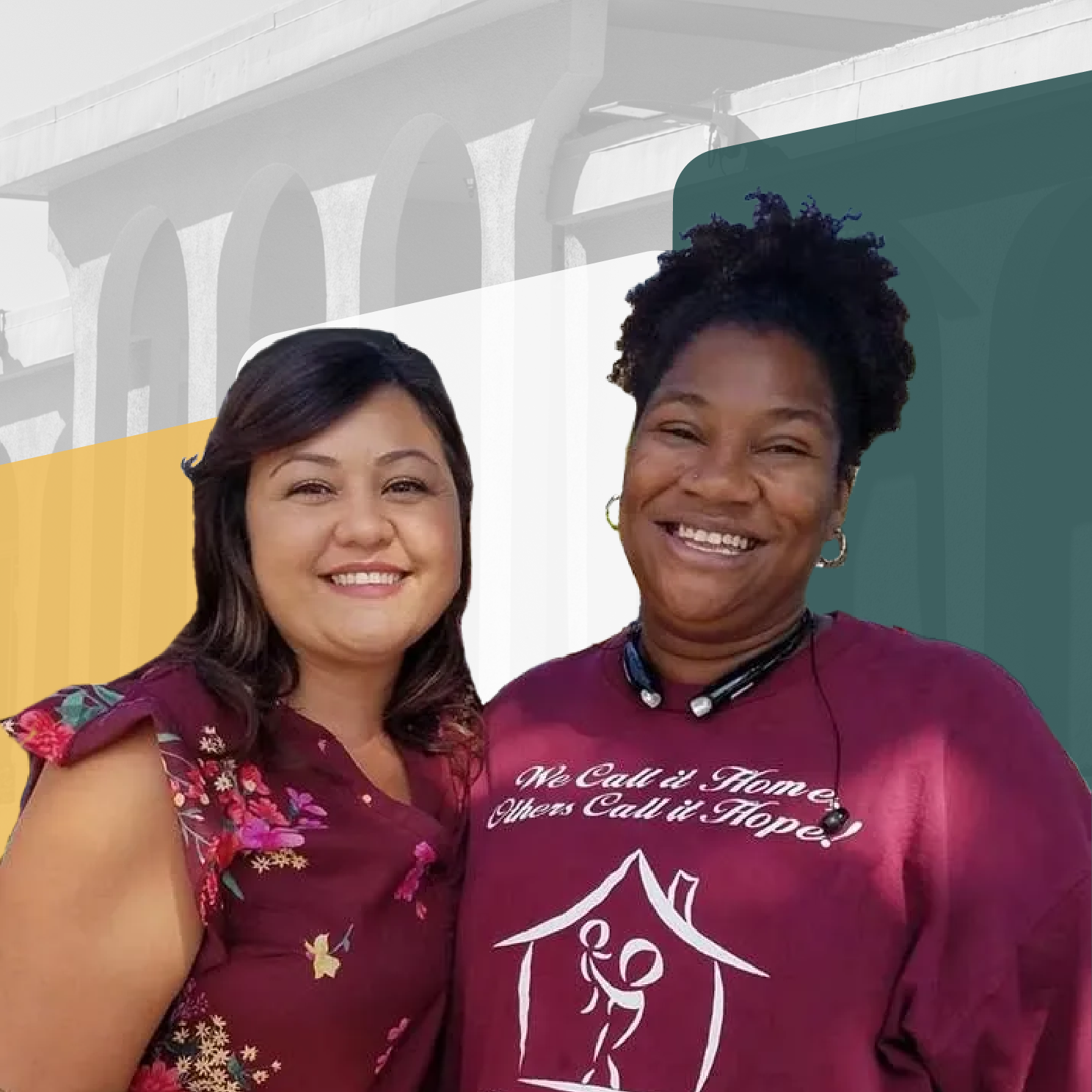
A Mother's Love
There is nothing quite as powerful as a mother’s love. From the moment her son was born, Sereeta knew she would do everything she could to protect him. She had already experienced the heartbreak of losing her children once, and she was determined never to feel that pain again.
Sereeta’s struggle with addiction began at the age of 19. She entered treatment and remained sober for six years, building a life she was proud of. But everything changed when she became a victim of domestic violence. The abuse eventually led to her losing custody of her five children -- a loss that shattered her world and led to relapse.
“I could not get away from him. He would try to control me.”
Desperate to escape the violence, Sereeta left and began living on the streets. She slept near a shopping center, searching for safety and resources wherever she could find them. One day, at a charity donations center, a woman noticed her and offered help. That connection led Sereeta to Cedar House, where she sought treatment for methamphetamine and marijuana addiction, and where her life began to change.
“I knew I wanted a change but didn’t know how.”
Years of trauma and loss had taken a toll. Sereeta struggled with anger and didn’t yet know how to process the pain she carried. What surprised her most was the compassion she encountered at Cedar House. Staff members didn’t give up on her. They believed in her, even when she struggled to believe in herself.
“I saw that different people had hope in me.”
Just one week after arriving at Cedar House, Sereeta was hospitalized. Over the next three weeks, she remained in close contact with staff, calling regularly for reassurance.
“I didn’t want to lose my son. I didn’t want to feel that pain again.”
After an eight-hour surgery and a blood transfusion, Sereeta gave birth to a healthy baby boy. But the next day, a police officer and social worker arrived at her hospital room with the devastating news that she would not be taking her baby home.
Four days later, Sereeta returned to Cedar House with 34 surgical staples, deep emotional wounds, and a renewed determination.
“That’s when I believe my journey started. I was fighting for that little boy. I never fought so hard for anything in my life.”
The first month was difficult. Sereeta continued to wrestle with anger, grief, and the trauma of her past.
“The first month was hard. It was a battle for me.”
Over six months at Cedar House, Sereeta did the work. She achieved sobriety, learned healthy ways to manage her anger, and began rebuilding her faith.
“I didn’t realize God had something else in store for me. I just had to trust in the process.”
After completing treatment, Sereeta transitioned into other supportive housing. Slowly, she began having overnight visits with her son. On August 22, those visits became extended stays. On September 5, she was granted full custody of her baby boy.
Today, Sereeta is a full-time Civic Engagement Specialist for a charitable foundation. She lives in her own apartment with her son and spends every other weekend with all of her children.
“I have established leadership skills, budgeting skills, and learned how to be a productive member of society as a mother.”
Looking back, Sereeta speaks of the “true, honest support” she found at Cedar House. The love and care she received from staff, and even something as simple as an Acceptance Prayer, carried her through moments when she felt overwhelmed.
“If it wasn’t for Cedar House, I would still be traumatized by the domestic violence. The staff members showed me love like I’ve never been shown before.”
Sereeta’s story is one of resilience, healing, and the power of believing in someone until they can believe in themselves. It is a testament to what is possible when compassion meets commitment, and when a mother is given the support she needs to fight for her future and her family.
June is PTSD Awareness Month, an important time to recognize the deep connection between trauma, mental health, and substance use. For many people, addiction does not happen in isolation. It is often tied to painful life experiences, untreated mental health symptoms, grief, violence, loss, instability, or long-term stress. When someone is living with post-traumatic stress disorder, or PTSD, substances may become a way to cope with memories, anxiety, fear, sleep problems, emotional pain, or feeling constantly on edge. At Cedar House Life Change Center, we understand that recovery must address the whole person. That means looking beyond substance use alone and recognizing the mental health challenges that often come with addiction. Understanding PTSD and Substance Use PTSD can develop after someone experiences or witnesses a traumatic event. Symptoms may include flashbacks, nightmares, panic, avoidance, emotional numbness, irritability, difficulty trusting others, and feeling unsafe even when danger has passed. These symptoms can be overwhelming, especially when a person does not have the support, treatment, or tools to manage them. For some, alcohol or drugs may feel like temporary relief. Over time, however, substance use often makes trauma symptoms worse and creates a cycle that becomes harder to break. This is why treating addiction without addressing co-occurring mental health disorders can leave people without the full support they need to heal. Cedar House Specializes in Co-Occurring Disorders Cedar House specializes in serving individuals with substance use disorders and co-occurring mental health conditions, including PTSD, anxiety, depression, mood disorders, and other behavioral health needs. Our clinical team is experienced in working with clients whose recovery is complicated by trauma, emotional distress, and higher levels of acuity. Many treatment programs are not equipped to support clients with more complex mental health presentations. At Cedar House, we have developed the ability to manage and support more acute cases when clinically appropriate. This means we are often able to serve individuals who may need more structure, closer monitoring, stronger clinical coordination, and a more comprehensive approach than a traditional substance use treatment setting can provide. Our goal is not simply to stabilize substance use. Our goal is to help clients build a foundation for long-term recovery by addressing the mental health symptoms, trauma responses, and life circumstances that may be contributing to addiction. A Trauma-Informed Approach to Recovery Trauma-informed care means recognizing that many people entering treatment have experienced significant pain before they ever arrive at our doors. It means creating an environment where clients feel safe, respected, understood, and supported rather than judged. At Cedar House, this approach is reflected in the way we provide care. We focus on compassion, structure, accountability, and individualized support. Clients are treated as people with stories, strengths, and potential, not as diagnoses or behaviors. For individuals with PTSD and addiction, recovery may include learning how to manage triggers, regulate emotions, rebuild trust, develop healthy coping skills, reconnect with family and community, and begin to imagine life beyond survival. Healing takes time, but with the right support, it is possible. Meeting Clients Where They Are Cedar House serves many individuals who come to treatment with complex needs, including co-occurring mental health disorders, homelessness or housing instability, justice involvement, medical concerns, and limited support systems. These challenges can make recovery more difficult, but they do not make recovery impossible. Our programs are designed to meet clients where they are and help them move toward stability, dignity, and wholeness. By offering a continuum of care that includes withdrawal management, residential treatment, outpatient services, perinatal services, recovery support, and alumni engagement, Cedar House helps clients take the next step in their recovery journey. Why PTSD Awareness Matters PTSD Awareness Month reminds us that trauma is not a character flaw, and addiction is not a moral failure. Both are health conditions that deserve compassionate, evidence-based care. When communities understand the connection between trauma and substance use, we reduce stigma and create more pathways to healing. At Cedar House, we believe people can recover when they are given the right care, the right environment, and the right support. For individuals living with PTSD and addiction, that means treatment that sees the full picture and responds with both clinical expertise and compassion. This June, we honor those who are living with trauma, those who are seeking recovery, and those who are learning that healing is possible. Cedar House remains committed to helping individuals affected by addiction and co-occurring mental health disorders find wholeness in recovery.

by Mark D. Gobert
Learn what happens in residential addiction treatment step-by-step, from detox to therapy and recovery planning at Cedar House Life Change Center.
Share On: